
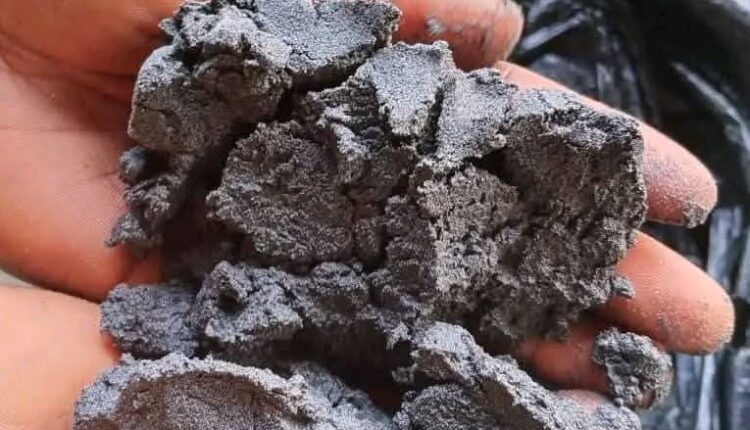
Former President of the Ijaw Youth Council (IYC), **Engr. Udengs Eradiri**, has called on the Bayelsa State Government to establish a state-owned mining company to harness the economic potential of black sand deposits found across the state’s coastal communities.
Eradiri, a former Bayelsa State Commissioner for Youth Development and later Commissioner for Environment, made the call in a post on his verified Facebook page amid growing debate over black sand mining activities in the Niger Delta.
According to him, Bayelsa should focus on deriving economic value from the mineral resource through proper regulation rather than treating the sector solely as a criminal enterprise.
“Time to set up Bayelsa State Mining Company. There is real money in the black sand, not to criminalise it. Zamfara, Osun and others are mining their gold and sharing with the Federal Government,” he wrote.
His comments come amid intensified enforcement against illegal black sand mining in Bayelsa. The state government recently banned unauthorised mining activities in several coastal communities, citing environmental degradation, security concerns and revenue losses. The Nigerian Navy has also stepped up operations against illegal miners in Brass Local Government Area, intercepting boats allegedly conveying illegally mined black sand and arresting suspects linked to the activities.
Black sand has increasingly attracted attention as a valuable solid mineral resource in the Niger Delta. Although often mistaken for ordinary beach sand, experts say the deposits commonly contain commercially valuable heavy minerals such as ilmenite, rutile, zircon and magnetite, which are used in the production of titanium dioxide, steel, ceramics, paints, aerospace components, pigments and other industrial products.
Growing international demand for these minerals has fuelled illegal mining activities across coastal communities in Bayelsa, Rivers, Delta and Akwa Ibom states, with operators allegedly exporting the raw materials through informal channels.
In Bayelsa, communities in Brass, Southern Ijaw and parts of Ekeremor Local Government Area have witnessed increased black sand extraction, raising concerns over coastal erosion, destruction of mangrove ecosystems, degradation of farmlands and fishing grounds, as well as the lack of tangible benefits to host communities.
Environmental experts have warned that indiscriminate mining along riverbanks and shorelines could accelerate coastal erosion and increase the vulnerability of fragile Niger Delta communities to flooding and rising sea levels.
The Bayelsa State Government has consistently maintained that mining activities must comply with environmental regulations and obtain the necessary approvals from relevant authorities. Officials have also expressed concern that illegal operators deprive both the federal and state governments of legitimate revenue while exposing host communities to significant environmental risks.
Eradiri’s proposal is expected to rekindle debate over the role Bayelsa should play in developing its solid minerals sector.
Although ownership and regulation of mineral resources are vested in the Federal Government under the Nigerian Constitution and administered through the Federal Ministry of Solid Minerals Development, state governments can participate in the sector through licensed mining companies, joint ventures and investment partnerships with holders of mining licences.
Analysts say the establishment of a state-backed mining company could help formalise black sand mining, attract private investment, create employment opportunities, boost internally generated revenue and strengthen environmental oversight, while ensuring that host communities derive greater benefits from the resource.
The proposal also comes at a time when several resource-rich states are exploring solid minerals as alternative sources of revenue amid fluctuating oil earnings, with states such as Zamfara and Osun pursuing investments in their mineral resources through partnerships with licensed operators in collaboration with the Federal Government.